 jobdiv.com
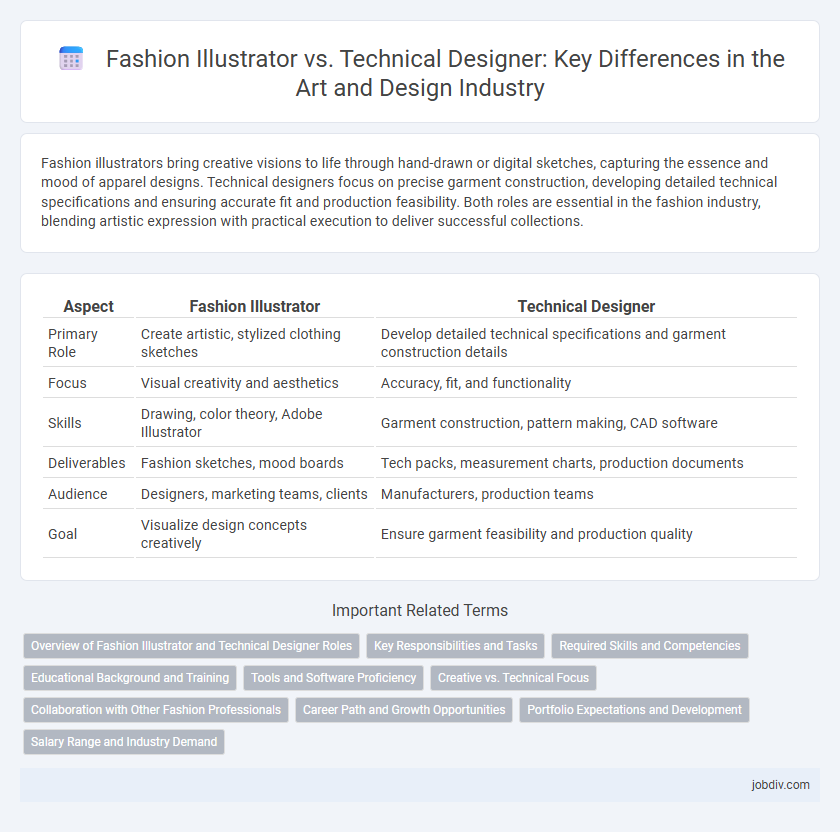
 Fashion illustrators bring creative visions to life through hand-drawn or digital sketches, capturing the essence and mood of apparel designs. Technical designers focus on precise garment construction, developing detailed technical specifications and ensuring accurate fit and production feasibility. Both roles are essential in the fashion industry, blending artistic expression with practical execution to deliver successful collections.
Table of Comparison
| Aspect | Fashion Illustrator | Technical Designer |
|---|---|---|
| Primary Role | Create artistic, stylized clothing sketches | Develop detailed technical specifications and garment construction details |
| Focus | Visual creativity and aesthetics | Accuracy, fit, and functionality |
| Skills | Drawing, color theory, Adobe Illustrator | Garment construction, pattern making, CAD software |
| Deliverables | Fashion sketches, mood boards | Tech packs, measurement charts, production documents |
| Audience | Designers, marketing teams, clients | Manufacturers, production teams |
| Goal | Visualize design concepts creatively | Ensure garment feasibility and production quality |
Overview of Fashion Illustrator and Technical Designer Roles
Fashion illustrators create artistic representations of clothing designs, emphasizing creativity, style, and visual storytelling to convey fashion concepts. Technical designers focus on the technical specifications, garment construction, and fit, ensuring designs are practical for production and manufacturing. Both roles are essential in the fashion industry, balancing creativity with functionality to bring fashion designs from concept to reality.
Key Responsibilities and Tasks
Fashion illustrators create detailed, artistic sketches and visual concepts to communicate design ideas and trends, emphasizing aesthetics and creativity. Technical designers develop precise garment specifications, including measurements, fabric details, and construction methods, ensuring designs are feasible for production. Both roles require collaboration with designers and manufacturers, but illustrators focus on visual storytelling while technical designers prioritize accuracy and functionality.
Required Skills and Competencies
Fashion illustrators require strong artistic skills, creativity, and proficiency in digital illustration tools such as Adobe Illustrator and Photoshop to create compelling design concepts. Technical designers demand expertise in garment construction, pattern making, textile knowledge, and precision with technical software like CAD for accurate technical flats and specifications. Both roles require an understanding of fashion trends and strong communication skills to effectively collaborate with design and production teams.
Educational Background and Training
Fashion illustrators typically possess a background in fine arts, emphasizing drawing, color theory, and creative design, often obtained through degrees in fashion design or illustration. Technical designers usually have specialized education in apparel engineering, garment construction, and pattern-making, with training from fashion technology programs or technical design certifications. Proficiency in CAD software and garment fit analysis distinguishes technical designers from fashion illustrators, who concentrate on artistic rendering skills.
Tools and Software Proficiency
Fashion illustrators primarily rely on tools like Adobe Photoshop and Procreate to create expressive, hand-drawn sketches that emphasize style and aesthetics. Technical designers use software such as Gerber AccuMark and Lectra for creating precise garment specifications, pattern making, and fit analysis. Proficiency in these distinct software platforms highlights the contrast between the creative visualization skills of fashion illustrators and the detailed, production-oriented expertise of technical designers.
Creative vs. Technical Focus
Fashion illustrators emphasize creative expression by producing visually compelling sketches that capture the mood, style, and aesthetic concepts of a collection. Technical designers concentrate on precise garment construction details, including pattern making, fit adjustments, and production specifications to ensure design feasibility and quality. The synergy between creative visions of fashion illustrators and the technical expertise of designers is essential for transforming artistic ideas into wearable products.
Collaboration with Other Fashion Professionals
Fashion illustrators collaborate closely with designers and marketers to visually communicate the creative vision of a collection, enhancing concept development through artistic renderings. Technical designers work alongside pattern makers, garment technologists, and production teams to ensure accurate specifications and fit, translating design sketches into precise manufacturing guidelines. Both roles require seamless coordination to bridge creativity and practicality, ensuring cohesive product development within the fashion industry.
Career Path and Growth Opportunities
Fashion Illustrators specialize in creating visual representations of apparel through artistic sketches that communicate design concepts and inspire collection development. Technical Designers focus on the precise construction and fit of garments, translating design ideas into detailed specifications that streamline production and ensure quality standards. Career growth for Fashion Illustrators typically leads to roles in creative direction or freelance artistry, while Technical Designers advance into positions like product development managers or quality assurance specialists, both offering diverse opportunities in the fashion industry.
Portfolio Expectations and Development
Fashion illustrators emphasize creativity and visual storytelling in their portfolios, showcasing hand-drawn or digital renderings that highlight artistic skills and trend interpretation. Technical designers focus on detailed specification sheets, garment construction, and precise CAD drawings to demonstrate their understanding of materials, fit, and production processes. Employers expect fashion illustrators to present dynamic concepts while technical designers must provide clear, concise documentation supporting efficient manufacturing.
Salary Range and Industry Demand
Fashion illustrators typically earn between $40,000 and $70,000 annually, driven by high demand in advertising, editorial, and luxury brands requiring creative visual representations of designs. Technical designers command salaries ranging from $55,000 to $90,000, reflecting their essential role in translating creative concepts into precise garment specifications within mass production and manufacturing sectors. Industry demand favors technical designers due to the increasing complexity of apparel production and the growth of fast fashion, while fashion illustrators maintain steady opportunities in niche markets emphasizing artistic innovation.
Fashion Illustrator vs Technical Designer Infographic