 jobdiv.com
 Nurse Practitioners (NPs) have advanced training and can diagnose illnesses, prescribe medications, and develop treatment plans, whereas Registered Nurses (RNs) primarily provide patient care and support under the supervision of physicians or NPs. NPs hold a master's or doctoral degree and often specialize in areas like family health or pediatrics, while RNs typically have an associate or bachelor's degree in nursing. Both roles are essential in healthcare, but NPs take on greater responsibilities in patient management and clinical decision-making.
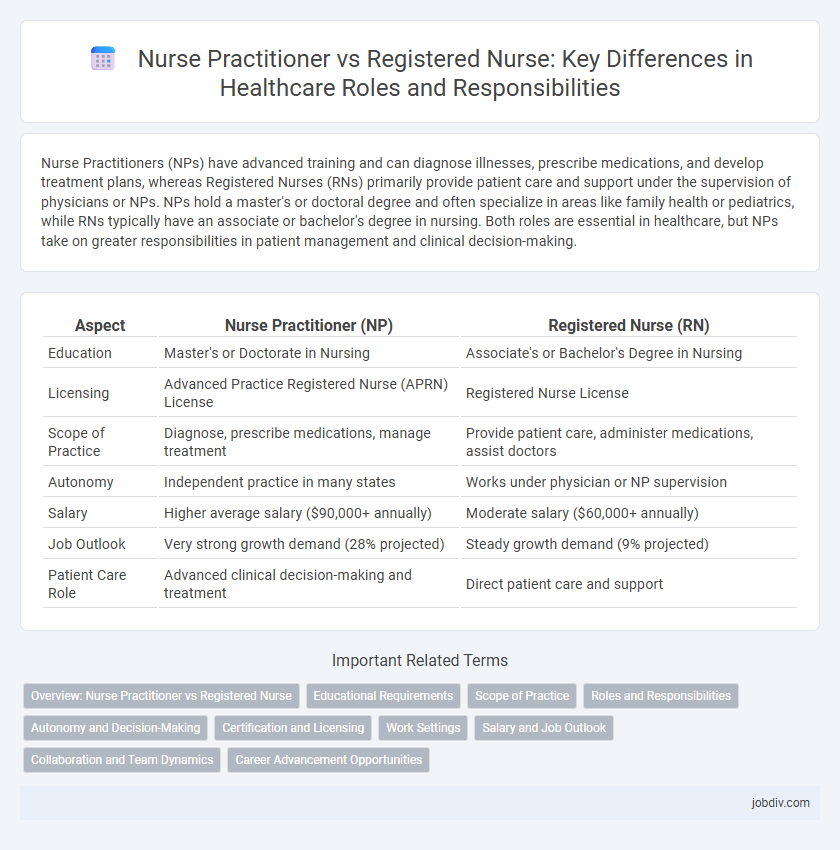
Table of Comparison
| Aspect | Nurse Practitioner (NP) | Registered Nurse (RN) |
|---|---|---|
| Education | Master's or Doctorate in Nursing | Associate's or Bachelor's Degree in Nursing |
| Licensing | Advanced Practice Registered Nurse (APRN) License | Registered Nurse License |
| Scope of Practice | Diagnose, prescribe medications, manage treatment | Provide patient care, administer medications, assist doctors |
| Autonomy | Independent practice in many states | Works under physician or NP supervision |
| Salary | Higher average salary ($90,000+ annually) | Moderate salary ($60,000+ annually) |
| Job Outlook | Very strong growth demand (28% projected) | Steady growth demand (9% projected) |
| Patient Care Role | Advanced clinical decision-making and treatment | Direct patient care and support |
Overview: Nurse Practitioner vs Registered Nurse
Nurse Practitioners (NPs) are advanced practice registered nurses with graduate-level education and clinical training, authorized to diagnose, treat, and prescribe medications independently in many states. Registered Nurses (RNs) hold a nursing diploma or associate/bachelor's degree and provide direct patient care, administer medications, and coordinate healthcare services under physician or NP supervision. NPs have a broader scope of practice and higher earning potential compared to RNs, reflecting their specialized skills and elevated responsibility within healthcare teams.
Educational Requirements
Nurse Practitioners (NPs) typically require a Master of Science in Nursing (MSN) or higher, including clinical training and national certification, while Registered Nurses (RNs) usually need an Associate Degree in Nursing (ADN) or a Bachelor of Science in Nursing (BSN) and must pass the NCLEX-RN exam. NPs undergo advanced education to perform diagnostic and treatment functions, whereas RNs focus on providing direct patient care and support under supervision. The extended education and certification process for NPs enables them to take on more autonomous roles in healthcare settings.
Scope of Practice
Nurse Practitioners (NPs) have a broader scope of practice compared to Registered Nurses (RNs), including diagnosing illnesses, ordering and interpreting diagnostic tests, and prescribing medications independently in many states. Registered Nurses primarily focus on patient care, administering medications, and coordinating treatment plans under the supervision of physicians or NPs. The expanded scope of Nurse Practitioners allows them to serve as primary care providers, especially in underserved areas.
Roles and Responsibilities
Nurse Practitioners (NPs) provide advanced clinical care, including diagnosing illnesses, prescribing medications, and developing treatment plans, often operating autonomously or in collaboration with physicians. Registered Nurses (RNs) focus on direct patient care, administering medications, monitoring vital signs, and educating patients on health management and disease prevention. NPs have a higher level of training with a master's or doctoral degree, enabling them to perform comprehensive health assessments and manage chronic conditions beyond the scope of RNs.
Autonomy and Decision-Making
Nurse Practitioners possess greater autonomy in clinical decision-making compared to Registered Nurses, allowing them to diagnose conditions, prescribe medications, and develop treatment plans independently. Registered Nurses typically follow treatment protocols and collaborate with physicians but have limited authority in making autonomous medical decisions. The enhanced autonomy of Nurse Practitioners supports complex patient management and improves access to healthcare services in diverse settings.
Certification and Licensing
Nurse Practitioners (NPs) require advanced certification through a master's or doctoral degree in nursing and must pass a national certification exam specific to their specialization, such as family or pediatric care. Registered Nurses (RNs) obtain licensing by passing the NCLEX-RN exam after completing an accredited nursing diploma or degree program, but do not have specialized certification unless pursuing further education. Licensing for both roles is regulated by state boards of nursing, with NPs holding prescriptive authority and a broader scope of practice due to their advanced certification.
Work Settings
Nurse Practitioners (NPs) often work in clinical environments such as hospitals, private practices, and specialty clinics, where they provide advanced care, diagnose illnesses, and prescribe medications. Registered Nurses (RNs) typically operate in diverse settings including hospitals, long-term care facilities, and community health organizations, delivering bedside care and coordinating patient treatment plans. The scope of practice and autonomy in work settings distinguishes NPs, who have prescriptive authority, from RNs focused on patient monitoring and support.
Salary and Job Outlook
Nurse Practitioners (NPs) typically earn a median annual salary of around $120,680, significantly higher than Registered Nurses (RNs), who earn approximately $77,600. The job outlook for NPs is projected to grow 45% from 2021 to 2031, driven by increased demand for primary and specialized care, whereas RN employment is expected to grow 9%. Both careers offer strong employment opportunities, but Nurse Practitioners experience faster growth and higher compensation due to advanced education and expanded clinical responsibilities.
Collaboration and Team Dynamics
Nurse Practitioners often take on advanced clinical roles, diagnosing and treating patients independently while collaborating closely with physicians and healthcare teams to ensure comprehensive care. Registered Nurses play a vital role in patient management, executing care plans and communicating patient needs to both Nurse Practitioners and doctors, fostering seamless teamwork. Effective collaboration between Nurse Practitioners and Registered Nurses enhances patient outcomes by combining advanced clinical expertise with frontline patient care and monitoring.
Career Advancement Opportunities
Nurse Practitioners hold advanced degrees and can diagnose illnesses, prescribe medication, and manage patient care independently, offering greater career advancement opportunities compared to Registered Nurses. Registered Nurses typically require further education and certification to transition into Nurse Practitioner roles, opening pathways to leadership, specialized clinical positions, and higher salaries. Enhanced scopes of practice for Nurse Practitioners lead to expanded responsibilities and increased demand in healthcare settings, driving professional growth and career development.
Nurse Practitioner vs Registered Nurse Infographic