 jobdiv.com
 A registered dietitian (RD) is a nutrition expert who has met strict academic and professional requirements, including earning a bachelor's degree, completing supervised practice, and passing a national exam. Nutritionists may offer dietary guidance but lack standardized certification, which can lead to variations in expertise and credibility. Choosing a registered dietitian ensures evidence-based nutrition advice tailored to individual health needs and clinical conditions.
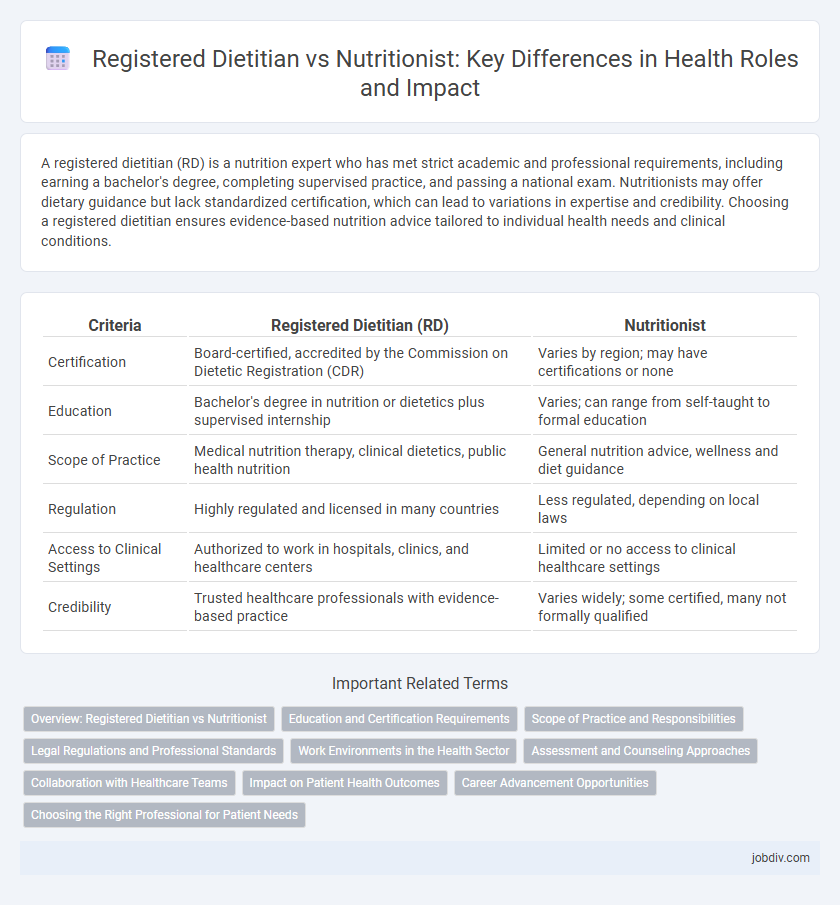
Table of Comparison
| Criteria | Registered Dietitian (RD) | Nutritionist |
|---|---|---|
| Certification | Board-certified, accredited by the Commission on Dietetic Registration (CDR) | Varies by region; may have certifications or none |
| Education | Bachelor's degree in nutrition or dietetics plus supervised internship | Varies; can range from self-taught to formal education |
| Scope of Practice | Medical nutrition therapy, clinical dietetics, public health nutrition | General nutrition advice, wellness and diet guidance |
| Regulation | Highly regulated and licensed in many countries | Less regulated, depending on local laws |
| Access to Clinical Settings | Authorized to work in hospitals, clinics, and healthcare centers | Limited or no access to clinical healthcare settings |
| Credibility | Trusted healthcare professionals with evidence-based practice | Varies widely; some certified, many not formally qualified |
Overview: Registered Dietitian vs Nutritionist
A Registered Dietitian (RD) is a certified expert with accredited education, supervised practice, and national licensing, ensuring evidence-based nutritional guidance for medical and wellness needs. Nutritionists may lack standardized certification, and their qualifications vary widely, sometimes including informal training or specialty certifications. Understanding these distinctions is essential for receiving accurate dietary advice tailored to specific health conditions or goals.
Education and Certification Requirements
Registered Dietitians (RDs) must complete a bachelor's degree in dietetics or nutrition, pass a national examination, and complete supervised practice through an accredited dietetic internship. Nutritionists may have varying education levels, ranging from certifications to advanced degrees, but their title is not legally protected in many regions, leading to less standardized credential requirements. Certification for nutritionists can include credentials like Certified Nutrition Specialist (CNS), but these do not always require the same rigorous education or supervised experience as RDs.
Scope of Practice and Responsibilities
Registered Dietitians (RDs) possess standardized credentials and are licensed healthcare professionals specializing in medical nutrition therapy, clinical assessments, and individualized diet planning for disease management. Nutritionists typically have varied education levels and certifications, with a broader scope often limited to general nutrition advice and wellness counseling rather than clinical treatment. RDs work in hospitals, clinics, and research settings, while nutritionists frequently serve in community programs and wellness environments without regulatory oversight.
Legal Regulations and Professional Standards
Registered Dietitians (RDs) are licensed healthcare professionals regulated by state boards, ensuring adherence to strict educational, clinical, and ethical standards. Nutritionists may have varied credentials and are often unregulated, leading to inconsistencies in their qualifications and practice standards. Legal regulations protect consumers by requiring RDs to meet specific certification criteria, while nutritionists may lack standardized oversight, impacting professional accountability and public trust.
Work Environments in the Health Sector
Registered Dietitians typically work in clinical settings such as hospitals, outpatient clinics, and long-term care facilities, providing medical nutrition therapy and collaborating with healthcare teams to manage patient care. Nutritionists often work in community health programs, wellness centers, public health organizations, and private practices, focusing on general nutrition education and wellness promotion. Both roles contribute significantly to health sector outcomes but differ in regulatory requirements and scope of practice within various work environments.
Assessment and Counseling Approaches
Registered Dietitians (RDs) utilize evidence-based assessment tools such as dietary recalls, biochemical data, and body composition analysis to develop personalized nutrition plans, ensuring accuracy and clinical relevance. Nutritionists may rely more on general dietary guidelines and subjective assessments, with variability in certification and scope of practice affecting counseling methods. RDs provide medical nutrition therapy with formal training in clinical settings, while nutritionists typically offer broader wellness advice focusing on preventive nutrition.
Collaboration with Healthcare Teams
Registered Dietitians (RDs) possess accredited credentials and often work directly within healthcare teams to develop personalized nutrition plans based on clinical assessments. Nutritionists may have varied qualifications and typically provide general dietary advice, but their integration with multidisciplinary healthcare teams is less standardized. Effective collaboration between RDs and healthcare professionals enhances patient outcomes through evidence-based nutritional interventions.
Impact on Patient Health Outcomes
Registered Dietitians (RDs) possess accredited credentials and clinical training that enable precise nutritional assessments and tailored intervention plans, significantly improving patient health outcomes. Nutritionists, lacking standardized certification, vary in expertise, which can affect the consistency and effectiveness of dietary guidance. Studies indicate that interventions led by RDs result in better management of chronic diseases such as diabetes, cardiovascular conditions, and obesity due to evidence-based practice and comprehensive patient monitoring.
Career Advancement Opportunities
Registered Dietitians (RDs) typically experience greater career advancement opportunities due to their accredited education, supervised practice requirements, and certification by the Commission on Dietetic Registration, which are often mandated by employers in clinical, community, and corporate settings. Nutritionists, who may have variable credentialing depending on state regulations, often face limitations in roles requiring licensure or certification, affecting access to senior clinical positions and specialized areas such as medical nutrition therapy. Employers in hospitals, government agencies, and research institutions commonly prioritize Registered Dietitians for leadership roles, advancing professional growth and higher earning potential.
Choosing the Right Professional for Patient Needs
When selecting between a Registered Dietitian (RD) and a Nutritionist, consider that RDs hold accredited degrees and complete supervised practice, ensuring evidence-based nutrition care tailored to clinical conditions. Nutritionists may have varied certification levels and specialization, making it essential to verify credentials for accurate dietary guidance. Patients with chronic illnesses or specific medical needs benefit most from RDs due to their comprehensive training and recognized licensure.
Registered Dietitian vs Nutritionist Infographic